(Save currently selected screen (Ctrl+S)) to save the current screen file. Once a screen or object has been named and saved, its name will appear on its tab in the Screen pane when it is reopened.
On the Canvas toolbar, click (Save currently selected screen (Ctrl+S)) to save the current screen file. Once a screen or object has been named and saved, its name will appear on its tab in the Screen pane when it is reopened.
 Add to make a New subfolder, as necessary. Type a folder name and click
  to accept the new folder name. Select the new folder, type a File name, and click Save as.
 Note: Access Save as via the Backstage view to edit an existing screen file name or make changes to its folder location.
When naming Canvas files, only use alphanumeric characters 0-9, a-z, and the set of characters generally acceptable for your Windows operating system. Certain characters are reserved for specific meanings, so do not use them when naming files. Characters to avoid are: < (less than), > (greater than), : (colon), " (double quote), / (forward slash), \ (backslash), | (vertical bar or pipe), ? (question mark), or * (asterisk).
|
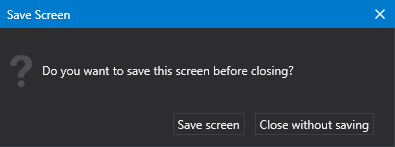
When closing an unsaved screen (by clicking the X button), and you have not previously saved the screen, you will see a Save Screen message. Do one of the following:
|
|
||
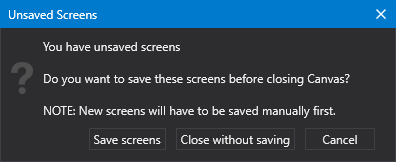
Saving when Closing the Canvas ApplicationWhen closing Canvas (by either via Backstage view > Exit or clicking the X button), and you have unsaved screens, you will see an Unsaved Screens message. Do one of the following:
|
|
|
|
|