 The Map supports the following properties, which are available via the Properties pane and the Canvas script editor. Click next to any property name in the Properties pane to see a short description for the selected property.
Before adding a map control to a Canvas screen, you must first configure the global map settings in the Backstage view. Global map settings include the map provider, API key, and the CygNet facility attributes where latitude and longitude coordinates are stored. See Configuring Map Settings for more information.
Note: The Map is not visible in design mode.
See Accessing Screen Objects for more information about how to view control objects in script in the Canvas application.
Categorizing, Sorting, and Finding Properties
You can click  (Categorize), click
  (Alphabetical within Category) or click
  (Search) within the properties using the features located immediately above the properties list. The search box is useful to help locate a property when an object contains many properties. For clarity, when you enter a search term, items matching your entry string remain displayed and non-matching items are temporarily hidden. Clear the search box to display the full properties list again.
You can expand and collapse each property category by clicking  or
or  next to the group name or simply clicking anywhere in the category heading.
Map Properties
The following tables describe the property names visible in the Properties pane user interface (UI) and the corresponding script property name.
 Click to see property list in alphabetical order
|
|
|
|
* As a commonly configured property, this property appears in two locations in the configuration pane: at the top with other Common properties and within its own property category. The property can be configured in either location.
| UI Property | Script Property | Description | ||||
|---|---|---|---|---|---|---|
| Name Type Style | ||||||
|
ControlName |
The Name property specifies the unique identifier for this control. Valid characters are A-Z, 0-9, and underscore (_). Special characters and spaces are not permitted. Names cannot start with a number; an underscore will be prefixed if the control name starts with a number. The default value is the object name and the numeric instance. The control's Name is also displayed on the Controls view of the Screen pane. |
|||||
|
ControlType |
The read-only Type property displays the type for the control: Button, Chart, CygNet Grid, Edit Box, Object Container, Search Box, Tag Chooser, etc. … The control's Type is also displayed on the Controls view of the Screen pane. |
|||||
|
|
Styles are created in two ways:
Tip: You can also change a control's Style on the Controls view of the Screen pane. |
|||||
Location
|
||||||
|
Height |
The Height property specifies the height of the control (or screen). Tip: You can also change the height of a control using the Settings pane (click on the |
|||||
|
HorizontalResizeMode |
The Horizontal resize mode property specifies whether and how the control dynamically moves or resizes horizontally when the screen is resized in run mode. Options include:
The default value is None. |
|||||
|
Layer |
Tip: You can also edit a control's Layer on the Controls view of the Screen pane. Note: Layer visibility can be controlled at runtime via the AddLayer, HideLayer, SetLayerVisibility, and ShowLayer methods on the Screen object. |
|||||
|
IsLocked |
Tip: You can also toggle the lock setting of a control using the Settings pane (click on the |
|||||
|
VerticalResizeMode |
The Vertical resize mode property specifies whether and how the control dynamically moves or resizes vertically when the screen is resized in run mode. Options include:
The default value is None. |
|||||
|
IsVisible |
Tip: You can also change a control's Visible setting on the Controls view of the Screen pane. |
|||||
|
Width |
The Width property specifies the width of the control (or screen). Tip: You can also change the width of a control using the Settings pane (click on the |
|||||
|
X |
The X property specifies the location of the control along the horizontal axis. Use the up, down, left, and right arrow keys to nudge a control by 1 pixel. Arrow moves a control by 1 pixel. Ctrl+Arrow moves a control by 10 pixels. Ctrl+Shift+Arrow moves a control by 100 pixels. Tip: You can also change the location of the control using the Settings pane; click on the |
|||||
|
Y |
The Y property specifies the location of the control along the vertical axis. Use the up, down, left, and right arrow keys to nudge a control by 1 pixel. Arrow moves a control by 1 pixel. Ctrl+Arrow moves a control by 10 pixels. Ctrl+Shift+Arrow moves a control by 100 pixels. Tip: You can also change the location of the control using the Settings pane; click on the |
|||||
|
ZIndex |
The Z index property is used to determine the order in which controls are layered on top of each other. Controls with higher values will draw on top of those with lower values. The newest control added to a screen will always have the highest value and will be the top layer. Two or more controls can be on the same index (layer). Tip: You can also change the Z index of a control using the Settings pane (click on the |
|||||
| Script
|
||||||
|
Tip: You can also change the Include in Script setting on the Controls view of the Screen pane. |
||||||
| Map
|
||||||
|
NA |
|
|||||
|
NA |
|
|||||
|
Center |
The Center property represents the center point of the map view when first displayed in run mode and is indicated by location coordinates. If no value is entered (default), the map is centered at 0°N 0°E, a point where the Prime Meridian intersects with the Equator, in the Gulf of Guinea off the coast of West Africa. Type the desired latitude and longitude location coordinates, for example, 29.76045,-95.36978, which represents the city of Houston, TX. |
|||||
|
DistanceUnit |
|
|||||
|
Layers |
The Layers property is where you configure the properties required to display the layers that will appear on your map. Layer properties include its name, visibility, data source, facility source, and visuals, which can be an image, a geometric shape, or a Canvas object. You can add as many layers and items as you want to your map. Click |
|||||
|
The Layers > General tab of the Map Layer Configuration dialog box is used to specify shared properties about each layer on the map control. Properties are grouped into the Common and Facility categories.
|
||||||
|
Name |
|
The Name specifies the name of the map layer. |
||||
|
Visible |
The Visible check box indicates whether to display the layer on the map in run mode. |
|||||
|
Data source |
|
The Data source specifies the source of the data used in the map layer. Only one option is available:
|
||||
|
Facility source |
|
The Facility property specifies the facility source for the map layer. Options include:
Note: A specific map layer can act as a facility sender, which can be designated as the facility source on any other control configured to receive it. Whenever the visible items are updated (via pan, zoom, etc.) the dependent control’s facilities are updated accordingly. |
||||
|
Facility filter |
|
The Facility filter option is visible only if the Facility Source is <Self>. Use the Facility filter property to limit the data presented in the control (or row or layer) to any CygNet facility attribute set up for your CygNet installation. Click |
||||
|
SiteService |
SiteServiceSender |
SiteService is only visible if the Facility Source is <Self>. The SiteService property specifies the source SiteService for the map layer. Options include:
|
||||
|
The Layers > Visuals tab of the Map Layer Configuration dialog box is used to configure the visuals displayed on each map layer. A visual represents what will be displayed for the facility at the coordinates specified. By default, this could be an image or icon to represent a facility location on the map layer, for example, well facilities could show an oil droplet icon. Alternately, you can display a geometric shape at the facility location or a Canvas object (.cob file).
|
||||||
|
Layers > Visuals > Image/Shape/Object > Common property group An icon |
||||||
|
Name |
|
The Name specifies the name of the visual item on the map layer. |
||||
|
Visibility |
|
The Visibility property specifies the visibility mode and zoom level of a visual item on a map layer. Use this property to restrict the item to a zoom range. By assigning different zoom ranges to different visuals you can change what is displayed as you zoom in and out of the map. For example, you could display an small image (e.g., a well icon) to designate facility locations when zoomed out to a state level, which could then change to display a Canvas object displaying additional facility information as you zoom into a neighborhood where facilities are located. The Visibility options include:
|
||||
|
Layers > Visuals > Image > Advanced > Image property group An icon Note: To prevent unexpected resizing of images we recommend that you use a uniform-sized image for the default image and any point-state alarm images to be displayed. You may be tempted to create different-sized images for different point states, but the map control does not resize images as the point state changes. The image size remains constant at the size displayed when the control is initialized. |
||||||
|
Image file path |
|
If the item on the map layer is an image, you can specify an image to represent facility locations on the map layer, for example, wells could show an oil droplet image. The common image types are supported (.svg, .bmp, .jpg, .png, etc…). Browse for the image file.
Click
* As a commonly configured property, this property appears in two locations in the configuration pane: at the top with other Common properties and within its own property category. The property can be configured in either location. |
||||
|
Image size |
|
The Image size property indicates the size of the item on the map layer.
* As a commonly configured property, this property appears in two locations in the configuration pane: at the top with other Common properties and within its own property category. The property can be configured in either location. |
||||
|
Image height |
|
The Image height property indicates the height of the configurable image to be displayed on the map layer. * As a commonly configured property, this property appears in two locations in the configuration pane: at the top with other Common properties and within its own property category. The property can be configured in either location. |
||||
|
Image width |
|
The Image width property indicates the width of the configurable image to be displayed on the map layer. * As a commonly configured property, this property appears in two locations in the configuration pane: at the top with other Common properties and within its own property category. The property can be configured in either location. |
||||
|
Images |
|
The Image Selection dialog box is where you configure CygNet-aware images that will dynamically change based on the point state of the associated point. The point state preference is configured in the Resolution mode property. A default image is displayed if you configure point-state-aware images and no matching state exists. Click Note: If no image is specified or the image is missing, a missing image icon ( |
||||
|
Images > Point scheme |
The Point scheme property lists the point schemes used in this CygNet domain. The point scheme defines the point types, point alarms, point statuses, and default colors for a CygNet domain. |
|||||
|
Images > Point type |
The Point type property lists the point types used in the selected point scheme. The point types are configured for the selected point scheme for your CygNet system. The default CygNet Standard Point Scheme has eight point types: Analog Input & Analog Output, Digital Input & Digital Output, Enumeration Input & Enumeration Output, and String Input & String Output. |
|||||
|
Images > Point state |
The Point state property lists the point states used in the selected point type. Point state is the highest precedented state for a point record as defined for each point scheme. The point state for a point record is based on 48 System, Configuration, and User status bits, which are associated with the four point types (Analog, Digital, String, Enumeration). A point record may contain up to 48 status bits, which are used to provide point status information about the point record in a CVS and the ELSALM. A point can be in multiple states at the same time, for example, in High Warning and High Alarm; however, the state defined to be the most severe is the one that is used for the point state (i.e., High Alarm, in this case). |
|||||
|
Images > Image |
The Image property indicates the file path and file name of the image that will be substituted when the point state changes to the selected point state. Browse and select the desired image file. Click |
|||||
|
Resolution mode |
|
The Resolution mode property determines how a point's status should be used to select images to display. The image will display based on the point state or the alarm condition of the associated point. The point state of the associated point is evaluated to determine which image to display. Options include:
The default option is Point state. Point-state-aware images are configured in the Images property. Additional Resources For more information about Point State and Alarm Condition, see Points > Points Overview > Point State and Alarm Condition. |
||||
|
Size mode |
|
The Size mode property specifies the method used to size the image so it can scale without distortion. Options include:
The default value is Auto. If the Image height and/or Image width values exceed the boundaries of the visual, the image uses the selected Size mode behavior and is uniformly stretched to fit the item's boundaries. If the Image height and/or Image width values are smaller than the boundaries of the item, the image will be centered within the item's boundaries. |
||||
|
Layers > Visuals > Image > Advanced > Value property group An icon |
||||||
|
UDC |
|
The UDC property specifies the UDC to use with the list of facilities to generate the points that will populate this map visual. Click
* As a commonly configured property, this property appears in two locations in the configuration pane: at the top with other Common properties and within its own property category. The property can be configured in either location. |
||||
|
Suppress data retrieval |
|
The Suppress data retrieval check box indicates whether all CygNet data retrieval is suppressed for the control or map visual. Use this if you want to store point information in the control but don't want to automatically query services for data. Tokens will not be replaced and point state colors will be ignored. You can configure the control with a valid point configuration but the control will not retrieve any CygNet data. This allows you to display static text for a control, while still allowing CygNet data context available from script. If a control has a point configured, but Suppress data retrieval is enabled, Canvas won’t do much point processing. The one exception is point validity. If the control is configured to Hide invalid tag, then Canvas will check if the current tag is valid, even if Suppress data retrieval is enabled. This will allow you to configure some static text that will dynamically hide in the case of a templated screen for a facility that doesn’t have that particular point.
* As a commonly configured property, this property appears in two locations in the configuration pane: at the top with other Common properties and within its own property category. The property can be configured in either location. |
||||
|
Value format |
|
The Value format property specifies the format for the point's value using any of the valid .NET standard or custom numeric format strings. The value format applies to a point's Value, Primary Value, and Alternate Value properties. The default value format is #,##0.00, which corresponds to 123,456,789.12. Formats use # and 0, with a period (.) as the decimal separator and comma (,) as the thousands separator. Add additional zeros to show more decimal places. |
||||
|
Hide invalid tag |
|
The Hide invalid tag check box indicates whether to hide the element (a control, button, image, or map visual item) if it resolves to an invalid or unknown tag. Note: Invalid point tags and relative facility resolution work in the following way for single-value controls: when a point tag is invalid or unknown, the tag can be hidden using the Hide invalid tag property. In this situation, a control with only facility-based tokens that has a valid relative facility resolution, but results in an invalid point tag, then the point tag will be treated as an invalid tag and displayed accordingly. There may be a scenario where you want to hide a control when using facility-based attributes and relative facilities. Say you have a templated screen with a Text Tool displaying a Gas Meter, but not all Wells have an associated Gas Meter. You could hide the control for a Well that does not have an associated Gas Meter, and by not specifying a UDC, you can always show (or hide) a facility resolution with facility-based attributes only. |
||||
|
|
The Date and time format property specifies the format for a point's timestamp using any of the valid .NET standard or custom numeric format strings. The date and time format applies to any point's timestamp property. Use this property to override the Default date format, which is configured in the Application settings page of the Backstage view. The default date format is YYYY/MM/DD HH:MM:SS.fff, which corresponds to 2024/01/01 10:20:30.0001. All timestamps are local client time. If an invalid format is configured for the Date and time format, the control will automatically use the format configured for the Default date format saved in the global settings file, and configured in the Backstage view. Note: You can also use the Microsoft .NET Standard Date and Time Format Strings to define the text representation of a date and time value in Canvas. For example, "d" is the short date pattern and corresponds to 1/1/2024, "F" is the full date/time pattern and corresponds to Monday, January 1, 2024 1:45:30 PM. |
|||||
|
Layers > Visuals > Image > Advanced > Display property group An icon |
||||||
|
Text |
|
The Text property specifies the text that will appear on the face of the visual item. The item can
display a static text string, such as a label, legend, tooltip, or a dynamic text string based on point or facility attributes. Dynamic text is built using tokens, which can represent real-time CVS point properties, point configuration properties, and facility properties. In run mode, the tokens are replaced with the attribute's value. Click Notes:
|
||||
|
Mouse cursor |
|
The Mouse cursor property determines which mouse cursor will appear when the mouse hovers over this control or map visual. Select an option from the drop-down menu: Arrow ( |
||||
|
Layers > Visuals > Image > Advanced > Font property group An icon |
||||||
|
Font size |
|
The Font size property specifies the font size of the text on the control or map visual. |
||||
|
Text style |
|
The Text style property specifies the style to use for the text that appears on the control or map visual. Options include: Normal, Italic, or Oblique. The default value is Normal. |
||||
|
Text weight |
|
The Text weight property specifies the weight to use for the text that appears on the control or map visual. Options are: Normal or Bold. The default value is Normal. |
||||
|
Layers > Visuals > Image > Advanced > Tooltip property group An icon |
||||||
|
Tooltip mode |
The Tooltip mode property specifies how the tool will be displayed. Options include:
The default value is Text. Note: Scripted tooltips are supported for a scripted map via a TooltipOpening event where a custom tooltip can be constructed. |
|||||
|
Tooltip enabled |
The Tooltip enabled property indicates whether to display a tooltip when the mouse hovers over the map visual. |
|||||
|
Tooltip |
|
|||||
|
Layers > Visuals > Image > Advanced > Hyperlink property group An icon |
||||||
|
Click mode |
Hyperlink > Click mode for the Shape visual is The Click mode property determines the type of click to use when clicking on an image or a shape visual item on a map. Any associated facility will be passed to the specified screen (or script). Options are:
None is the default value.
|
|||||
|
Hyperlink mode |
Hyperlink > Hyperlink mode for the Shape visual is The Hyperlink mode property specifies how to handle navigation when clicking an image or shape on a Map. Specify the Screen file source to open in the Screen path property. Three hyperlink navigation options are available:
The default value is Open. See Hyperlinking Screens for more information about this functionality. |
|||||
|
Screen file source |
Hyperlink > Screen file source for the Shape visual is This property specifies the source of the file, object file, screen file, image file, or video file. Options include:
|
|||||
|
Screen path |
Hyperlink > Screen path for the Shape visual is The Screen path property specifies the screen that will open when an element (e.g., a row in a Grid, Image or Shape on a Map, Navigation Button, Shape, or Text Tool) is clicked. Browse for the screen file. Click
|
|||||
|
Custom line style |
|
|
||||
|
Line style |
|
The Line style property specifies the style of the Shape's border line. Click |
||||
|
Line width |
|
The Line width property specifies the width of the Shape's border line. |
||||
|
Shape geometry |
|
The Shape geometry property specifies a special abbreviated syntax that defines the shape's geometry. If you want to manually modify these values, set the Shape type to Custom. See Configuring Your Own Custom Shapes for information about how to create your own custom shapes.
* As a commonly configured property, this property appears in two locations in the configuration pane: at the top with other Common properties and within its own property category. The property can be configured in either location. |
||||
|
Shape type |
|
The default value is Custom. Select Custom to define your own shape and enter the values in the Shape geometry property. See Configuring Your Own Custom Shapes for information about how to create your own custom shapes. |
||||
|
Shape size |
|
* As a commonly configured property, this property appears in two locations in the configuration pane: at the top with other Common properties and within its own property category. The property can be configured in either location. |
||||
|
Shape height |
|
* As a commonly configured property, this property appears in two locations in the configuration pane: at the top with other Common properties and within its own property category. The property can be configured in either location. |
||||
|
Shape width |
|
* As a commonly configured property, this property appears in two locations in the configuration pane: at the top with other Common properties and within its own property category. The property can be configured in either location. |
||||
|
Stretch |
|
The Stretch property describes how the shape is resized to fill its allocated space. Click
The default value is Fill. |
||||
|
UDC |
|
The UDC property specifies the UDC to use with the list of facilities to generate the points that will populate this map visual. Click
* As a commonly configured property, this property appears in two locations in the configuration pane: at the top with other Common properties and within its own property category. The property can be configured in either location. |
||||
|
Suppress data retrieval |
|
The Suppress data retrieval check box indicates whether all CygNet data retrieval is suppressed for the control or map visual. Use this if you want to store point information in the control but don't want to automatically query services for data. Tokens will not be replaced and point state colors will be ignored. You can configure the control with a valid point configuration but the control will not retrieve any CygNet data. This allows you to display static text for a control, while still allowing CygNet data context available from script. If a control has a point configured, but Suppress data retrieval is enabled, Canvas won’t do much point processing. The one exception is point validity. If the control is configured to Hide invalid tag, then Canvas will check if the current tag is valid, even if Suppress data retrieval is enabled. This will allow you to configure some static text that will dynamically hide in the case of a templated screen for a facility that doesn’t have that particular point.
* As a commonly configured property, this property appears in two locations in the configuration pane: at the top with other Common properties and within its own property category. The property can be configured in either location. |
||||
|
Value format |
|
The Value format property specifies the format for the point's value using any of the valid .NET standard or custom numeric format strings. The value format applies to a point's Value, Primary Value, and Alternate Value properties. The default value format is #,##0.00, which corresponds to 123,456,789.12. Formats use # and 0, with a period (.) as the decimal separator and comma (,) as the thousands separator. Add additional zeros to show more decimal places. |
||||
|
Hide invalid tag |
|
The Hide invalid tag check box indicates whether to hide the element (a control, button, image, or map visual item) if it resolves to an invalid or unknown tag. Note: Invalid point tags and relative facility resolution work in the following way for single-value controls: when a point tag is invalid or unknown, the tag can be hidden using the Hide invalid tag property. In this situation, a control with only facility-based tokens that has a valid relative facility resolution, but results in an invalid point tag, then the point tag will be treated as an invalid tag and displayed accordingly. There may be a scenario where you want to hide a control when using facility-based attributes and relative facilities. Say you have a templated screen with a Text Tool displaying a Gas Meter, but not all Wells have an associated Gas Meter. You could hide the control for a Well that does not have an associated Gas Meter, and by not specifying a UDC, you can always show (or hide) a facility resolution with facility-based attributes only. |
||||
|
|
The Date and time format property specifies the format for a point's timestamp using any of the valid .NET standard or custom numeric format strings. The date and time format applies to any point's timestamp property. Use this property to override the Default date format, which is configured in the Application settings page of the Backstage view. The default date format is YYYY/MM/DD HH:MM:SS.fff, which corresponds to 2024/01/01 10:20:30.0001. All timestamps are local client time. If an invalid format is configured for the Date and time format, the control will automatically use the format configured for the Default date format saved in the global settings file, and configured in the Backstage view. Note: You can also use the Microsoft .NET Standard Date and Time Format Strings to define the text representation of a date and time value in Canvas. For example, "d" is the short date pattern and corresponds to 1/1/2024, "F" is the full date/time pattern and corresponds to Monday, January 1, 2024 1:45:30 PM. |
|||||
|
Layers > Visuals > Shape> Advanced > Color configuration property group |
||||||
|
Fill color |
|
The Fill color property specifies the color used for the internal body of the Shape.
The color can be sourced from one of three options provided in the Source drop-down menu:
Options include:
For each color property select the Source and Color:
Note: You can override the default point state colors for this element by creating a custom color palette. See Configuring Color Palettes and Color palette for a screen or object for more information. |
||||
|
Text color |
|
The Text color property specifies the color used for the text on the control or map visual.
The color can be sourced from one of three options provided in the Source drop-down menu:
Options include:
For each color property select the Source and Color:
Note: You can override the default point state colors for this element by creating a custom color palette. See Configuring Color Palettes and Color palette for a screen or object for more information. |
||||
|
Line color |
|
The Line color property specifies the color used for the border line of the Shape.
The color can be sourced from one of three options provided in the Source drop-down menu:
Options include:
For each color property select the Source and Color:
Note: You can override the default point state colors for this element by creating a custom color palette. See Configuring Color Palettes and Color palette for a screen or object for more information. |
||||
|
Layers > Visuals > Shape > Advanced > Display property group |
||||||
|
Text |
|
The Text property specifies the text that will appear on the face of the visual item. The item can
display a static text string, such as a label, legend, tooltip, or a dynamic text string based on point or facility attributes. Dynamic text is built using tokens, which can represent real-time CVS point properties, point configuration properties, and facility properties. In run mode, the tokens are replaced with the attribute's value. Click Notes:
|
||||
|
Mouse cursor |
|
The Mouse cursor property determines which mouse cursor will appear when the mouse hovers over this control or map visual. Select an option from the drop-down menu: Arrow ( |
||||
|
Font size |
|
The Font size property specifies the font size of the text on the control or map visual. |
||||
|
Text style |
|
The Text style property specifies the style to use for the text that appears on the control or map visual. Options include: Normal, Italic, or Oblique. The default value is Normal. |
||||
|
Text weight |
|
The Text weight property specifies the weight to use for the text that appears on the control or map visual. Options are: Normal or Bold. The default value is Normal. |
||||
|
Layers > Visuals > Shape > Advanced > Tooltip property group |
||||||
|
Tooltip mode |
The Tooltip mode property specifies how the tool will be displayed. Options include:
The default value is Text. Note: Scripted tooltips are supported for a scripted map via a TooltipOpening event where a custom tooltip can be constructed. |
|||||
|
Tooltip enabled |
The Tooltip enabled property indicates whether to display a tooltip when the mouse hovers over the map visual. |
|||||
|
Tooltip |
|
|||||
|
Layers > Visuals > Shape > Advanced > Hyperlink property group |
||||||
|
Click mode |
The Click mode property determines the type of click to use when clicking on an image or a shape visual item on a map. Any associated facility will be passed to the specified screen (or script). Options are:
None is the default value.
|
|||||
|
Hyperlink mode |
The Hyperlink mode property specifies how to handle navigation when clicking an image or shape on a Map. Specify the Screen file source to open in the Screen path property. Three hyperlink navigation options are available:
The default value is Open. See Hyperlinking Screens for more information about this functionality. |
|||||
|
Screen file source |
This property specifies the source of the file, object file, screen file, image file, or video file. Options include:
|
|||||
|
Screen path |
The Screen path property specifies the screen that will open when an element (e.g., a row in a Grid, Image or Shape on a Map, Navigation Button, Shape, or Text Tool) is clicked. Browse for the screen file. Click
|
|||||
|
Object file path |
|
If the visual item on the map layer is an object, you can specify a Canvas object file (.cob) to represent facility locations on the map layer, for example, a small object could display details about a facility location on the map. Browse for the object file (.cob).
Click
Note: If you want the object visual item to display tooltips, they must be configured for the controls that are included in the object file (.cob). |
||||
|
Map properties continued… |
||||||
|
Mode |
The Mode property indicates the map view mode to use when the map is first displayed. Options include:
|
|||||
|
ZoomLevel |
The Zoom level property represents the different levels of detail available on the map when initialized. The maximum level of available detail is determined by the location you are zooming into, for example, some areas can be zoomed in further than other areas. Type a value between 0 and 20. The default value is 0, which displays the whole world. For reference, the following values approximate the zoom levels: World = 2, State = 4, Region = 10, City = 14, Neighborhood = 18. |
|||||
| Generic
|
||||||
|
String |
|
|||||
|
YesNo |
|
|||||
 The Style property defines the style sheet applied to an object on a screen. A style sheet consists of a predetermined list of properties and property values configured for a particular control type.
  (Add a new style based on this control) next to the Style property, after you have configured property values in the Properties pane. See
  (Settings) to the right of the control in design mode) or on the
  The Include in script check box indicates that the control will appear in the objects collection of the screen (if scripting is enabled). To optimize performance, best practice dictates that you only include the controls you need to manipulate via script. Other controls should be excluded. When you add an event to a control, it will be automatically added to script and the Include in script property (and the In Script check box on the Controls view) will be set to True.
  to open the
  (Delete layer) to remove a layer from the map as necessary.
 and tooltip will display next to any property that is supported by the
  ) is displayed in both design and run mode.
 ), Hand (
 ), Wait (
 ), or Help (
 ). The default cursor is the Arrow (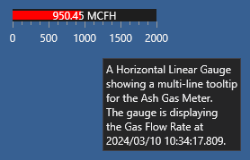

* As a commonly configured property, this property appears in two locations in the configuration pane: at the top with other Common properties and within its own property category. The property can be configured in either location.

